
Embarking on an E46 manual transmission swap is a rewarding, albeit complex, undertaking. Numerous online resources, like E46Fanatics, offer guidance and support for this popular modification.
Overview of the Project
The E46 manual transmission swap fundamentally transforms the driving experience, replacing the factory automatic with a more engaging, driver-focused setup. This isn’t a simple bolt-on procedure; it’s a comprehensive project demanding mechanical skill, patience, and a thorough understanding of the BMW E46’s drivetrain. Expect significant disassembly and reassembly of the center console, shifter mechanism, and undercarriage components.
Successful completion requires sourcing a compatible manual transmission – the Getrag GS6-53BG is a popular choice – along with the necessary supporting parts. Beyond the transmission itself, anticipate needing a new flywheel, clutch assembly, clutch lines, and potentially a transmission brace for added structural support. Careful planning and a detailed parts list are crucial to avoid delays and ensure a smooth installation process. Online communities, like E46Fanatics, provide invaluable guidance and shared experiences.
Why Swap to a Manual Transmission?
The allure of a manual transmission in the E46 stems from a desire for enhanced driver engagement and control. Many enthusiasts find the direct connection and tactile feedback of a manual gearbox significantly more rewarding than an automatic. Swapping also unlocks potential performance gains, as manual transmissions generally offer more efficient power delivery.
Beyond performance, a manual swap can address reliability concerns associated with aging automatic transmissions. For those seeking a more spirited driving experience, the ability to choose gears precisely and maintain control during cornering is a major benefit. It’s a modification driven by passion – a return to a more traditional and involving driving style, transforming the E46 into a truly driver-focused machine.

Planning and Parts Acquisition
Careful planning and sourcing the correct components are crucial for a successful E46 manual swap. A detailed parts list, referencing guides like those on E46Fanatics, is essential.
Identifying Compatible Transmissions (Getrag GS6-53BG)
The Getrag GS6-53BG is the most commonly sought-after six-speed manual transmission for the E46 chassis. Originally found in various BMW models, including the E90 335i and E85 Z4, it offers a robust and refined driving experience. Identifying a compatible unit requires verifying the bellhousing pattern, ensuring it matches the E46 engine (M54, M56, or S54).
Pay close attention to the input shaft spline count, as variations exist. The GS6-53BG typically features a 26-spline input shaft, suitable for most E46 setups. However, confirming compatibility with your specific engine and flywheel is paramount. Resources like E46Fanatics forums detail specific part numbers and potential fitment issues. Thorough research prevents costly mistakes and ensures a smooth installation process. Consider the transmission’s condition and mileage before purchasing, opting for a well-maintained unit whenever possible.
Essential Parts List: Transmission, Clutch, Flywheel
A successful E46 manual swap necessitates a comprehensive parts list beyond just the transmission itself. The Getrag GS6-53BG transmission is central, but a matching clutch kit – including disc, pressure plate, and throw-out bearing – is crucial. Select a clutch rated for your engine’s power output. A lightweight flywheel is highly recommended to improve engine responsiveness and rev matching.
Don’t overlook the pilot bearing, which supports the transmission input shaft. New hardware, including flywheel bolts and clutch alignment tool, is essential for proper installation. Referencing online swap guides, like those on E46Fanatics, provides detailed part numbers and recommendations. Budgeting for these core components upfront avoids delays and ensures a reliable conversion.
Supporting Components: Clutch Lines, Hoses, and Braces
Beyond the core transmission, clutch, and flywheel, several supporting components are vital for a functional E46 manual swap. Stainless steel clutch lines provide a firm pedal feel and prevent expansion under pressure, unlike rubber lines. A new clutch master cylinder and slave cylinder are strongly advised, often included in clutch kits, to ensure reliable operation.
A transmission brace is crucial to minimize chassis flex and maintain proper alignment, especially during spirited driving. Don’t forget the necessary hoses for fluid transfer. Thoroughly inspect and replace any worn or damaged lines. Online resources emphasize the importance of these often-overlooked parts for a smooth and dependable swap.
Drivetrain Mounts and Hardware
Securing the new manual transmission requires careful attention to drivetrain mounts and associated hardware. The original automatic transmission mounts will not be compatible; dedicated manual transmission mounts are essential. These mounts often come as part of swap kits, or can be sourced separately. Inspect and replace the driveshaft center support bearing (CSB) if present, as it may show wear.
New hardware, including bolts and washers, is highly recommended to ensure a secure and reliable connection. Consider upgrading to polyurethane mounts for increased stiffness and reduced drivetrain movement. Proper mounting is critical for minimizing vibrations and maximizing the longevity of the swap. Online guides frequently highlight the importance of quality mounts.

Preparation and Removal
Prior to the swap, disconnect the battery and drain all relevant fluids. Carefully remove the automatic transmission, driveshaft, and related components, preparing the chassis for installation.
Vehicle Preparation: Disconnecting Battery and Fluids
Before initiating the removal process, meticulous preparation is crucial for safety and efficiency. Begin by disconnecting the negative terminal of the battery to prevent any accidental electrical shorts during the swap. This is a fundamental safety precaution. Next, carefully drain both the transmission fluid and the engine oil.
Properly dispose of these fluids according to local environmental regulations. Additionally, it’s wise to drain the coolant, as some lines may need disconnection during transmission removal, potentially leading to spillage. Ensure you have appropriate containers and tools for fluid drainage. Document the locations of all disconnected lines and sensors with photos or notes to simplify reassembly. This proactive approach minimizes confusion and potential errors later in the process, ensuring a smoother transition to the manual setup.
Automatic Transmission Removal Procedure
Removing the automatic transmission requires a systematic approach and appropriate tools. Begin by supporting the engine from above with an engine support bar to prevent tilting during transmission separation. Disconnect the driveshaft, being mindful of any residual fluid. Then, detach the shift linkage, cooler lines, and all electrical connectors attached to the transmission.
Support the transmission with a transmission jack before removing the mounting bolts. Carefully lower the transmission, ensuring it clears all surrounding components. This step often requires patience and maneuvering. Once lowered, roll the transmission out from under the vehicle. Inspect the flexplate for any damage and set it aside for reuse with the new clutch. Remember to label all disconnected parts for easier reinstallation.
Driveshaft and Related Component Removal
Prior to transmission removal, the driveshaft must be disconnected. Mark the driveshaft and differential flange for proper alignment during reinstallation – maintaining this orientation is crucial for minimizing vibrations. Disconnect the driveshaft at the rear differential, securing any fluid leakage. Then, detach it from the transmission output shaft.
Next, remove the exhaust system components that obstruct access to the transmission and driveshaft. This typically includes sections of the exhaust piping and heat shields. Carefully inspect the guibo (flexible coupling) for wear or damage; replacement is highly recommended during the swap. Finally, detach any transmission-related brackets or supports that hinder removal, preparing the undercarriage for the next stage.

Installation Process
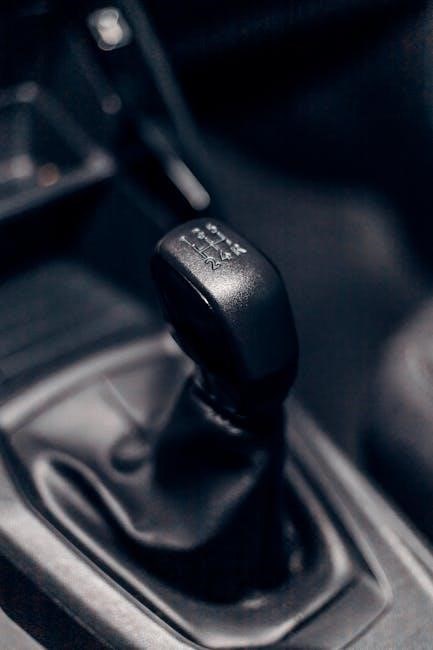
Carefully position the manual transmission, aligning it with the engine. Securely install the clutch and flywheel assembly, ensuring proper torque specifications are followed for optimal performance.
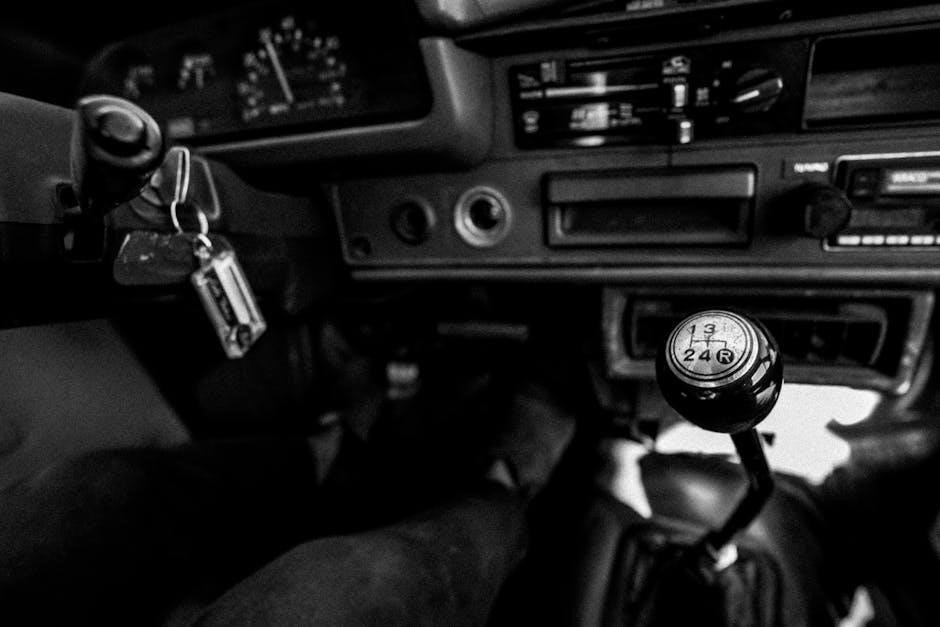
Manual Transmission Installation
Begin by carefully lifting the manual transmission into position, utilizing a transmission jack for controlled movement and safety. Align the input shaft with the clutch disc, gently rotating the engine crankshaft to facilitate engagement. Ensure the transmission mounts align perfectly with the chassis mounting points, preventing undue stress.
Secure the transmission using the appropriate hardware, tightening bolts to the manufacturer’s specified torque values. Double-check all connections, verifying proper seating and alignment. Pay close attention to the shift linkage, ensuring smooth and precise gear selection. A transmission brace is highly recommended to minimize movement and enhance stability, especially during spirited driving. Proper installation is crucial for a reliable and enjoyable driving experience.
Clutch and Flywheel Installation
Start by thoroughly cleaning the flywheel surface to ensure optimal clutch disc adhesion. Install the flywheel, aligning it correctly and tightening the bolts to the precise torque specification – crucial for preventing warping or imbalance. Next, carefully mount the clutch disc, ensuring it’s centered using a clutch alignment tool.
Then, install the pressure plate, again tightening the bolts in a star pattern to evenly distribute clamping force. Verify the clutch release bearing (throw-out bearing) is properly seated and lubricated. A new clutch, flywheel, and release bearing are strongly recommended for a reliable upgrade. Incorrect installation can lead to slippage, chatter, or premature failure, impacting drivability.
Driveshaft Installation and Alignment
Carefully slide the driveshaft into the transmission, ensuring it fully engages with the differential flange. Proper alignment is paramount to avoid vibrations and premature wear on the U-joints and center support bearing (if equipped). Mark the driveshaft and differential flange before removal to aid in re-installation at the original orientation.
Torque the driveshaft bolts to the manufacturer’s specification. Inspect the driveshaft’s flex disc for any cracks or damage, replacing it if necessary. Verify there’s no binding or resistance when rotating the driveshaft by hand. Misalignment can cause significant drivetrain stress, leading to costly repairs. Double-check all connections for secure fastening before proceeding.

Wiring and Electronics
Essential wiring tasks include connecting the transmission speed sensor and clutch switch. ECU coding is often required for proper functionality and to eliminate warning lights.
Transmission Speed Sensor Wiring
Proper wiring of the transmission speed sensor is crucial for accurate speedometer readings and correct operation of various vehicle systems. The E46’s onboard computer relies on this signal for functions like cruise control and potentially traction control. Typically, the Getrag GS6-53BG transmission will have a speed sensor output that needs to be connected to the E46’s wiring harness.
Identifying the correct wires in the harness is paramount; consult wiring diagrams specific to your E46 model year. Often, the signal wire, ground, and power supply will need to be connected. Ensure a secure and weatherproof connection to prevent signal interference or corrosion. Incorrect wiring can lead to inaccurate speed readings or error codes. Double-check all connections before proceeding, and consider using a multimeter to verify signal continuity and voltage.
Clutch Switch Installation and Wiring
Installing and correctly wiring the clutch switch is essential for safety and functionality during the E46 manual transmission swap. This switch allows the car to start only when the clutch pedal is depressed, preventing unintended vehicle movement. The switch typically mounts near the clutch pedal assembly and requires careful adjustment for proper operation.
Wiring involves connecting the switch to the E46’s electrical system, often utilizing existing wiring or running new wires. Identifying the correct wires is critical; consult wiring diagrams specific to your model year. A common setup involves a power supply, a ground, and a signal wire that interrupts the starter circuit. Ensure secure connections and proper insulation to avoid shorts. Verify functionality by testing the switch during startup attempts.
ECU Coding and Adaptation
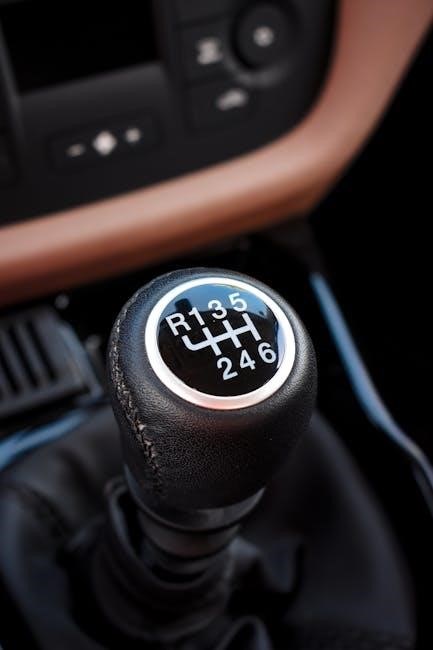
Following the E46 manual transmission swap, ECU coding and adaptation are crucial steps for optimal performance and to eliminate drivetrain warning lights. The Engine Control Unit (ECU) needs to be informed of the transmission change, as it originally expected an automatic. Coding typically involves using specialized software, like INPA or DIS, to modify the ECU’s parameters.
Adaptation procedures may also be necessary to allow the ECU to learn the new transmission’s characteristics. This can involve resetting adaptations and performing test drives to allow the system to calibrate. Failure to properly code and adapt the ECU can result in incorrect speedometer readings, transmission errors, and reduced engine performance. Professional assistance is recommended if you’re unfamiliar with these processes.
Final Steps and Testing
After installation, thoroughly check for fluid leaks and perform an initial test drive. Address any issues promptly, and fine-tune adjustments for a smooth experience.
Fluid Filling and Leak Checks
Following the manual transmission installation, meticulous fluid filling is paramount. Begin by carefully filling the transmission with the correct weight and type of gear oil, typically specified for the Getrag GS6-53BG transmission. Ensure the fill plug is accessible and use a pump to avoid spills. Next, bleed the clutch hydraulic system, using DOT 4 brake fluid, to eliminate air bubbles and ensure proper clutch engagement.
Crucially, perform a comprehensive leak check. Start the engine and allow it to run, inspecting all connections – the transmission input and output seals, the driveshaft flange, clutch lines, and the clutch slave cylinder. Pay close attention to the areas around the transmission mount and any newly installed fittings. Any detected leaks, even minor ones, must be addressed immediately to prevent damage and ensure reliable operation. Double-check all fluid levels after the initial run.
Initial Test Drive and Adjustments
After verifying fluid levels and leak-free operation, a cautious initial test drive is essential. Begin with low-speed maneuvers in a safe, open area. Pay close attention to clutch engagement – it should be smooth and predictable, without slipping or excessive travel. Evaluate gear selection; shifts should be crisp and precise, without grinding or difficulty finding the desired gear.
Listen for any unusual noises emanating from the transmission or drivetrain. Monitor the transmission temperature to ensure it remains within normal operating parameters. Minor adjustments to the clutch master cylinder may be necessary to optimize pedal feel. If any issues arise during the test drive, immediately return to the workshop for further inspection and correction before proceeding with more extensive testing.
Troubleshooting Common Issues
Post-swap, several issues may surface. Difficulty shifting often points to improper clutch adjustment, air in the hydraulic lines, or a faulty clutch master/slave cylinder. Grinding noises during gear changes suggest incomplete clutch disengagement or synchronizer issues. Unexpected vibrations could indicate a driveshaft imbalance or worn drivetrain mounts.
ECU coding errors can manifest as warning lights or limp mode; double-check coding parameters. Transmission speed sensor malfunctions may cause inaccurate speedometer readings or shifting problems. Consult E46Fanatics forums for solutions, as many owners have documented similar experiences. Thoroughly review all connections and ensure proper component functionality before resorting to more complex diagnostics.

Resources and Further Information
E46Fanatics forums and dedicated online guides are invaluable. These communities provide detailed instructions, parts lists, and troubleshooting advice for your swap.
E46Fanatics Forums and Online Communities
E46Fanatics is arguably the most comprehensive online resource for BMW E46 enthusiasts undertaking a manual transmission swap. The forums are brimming with detailed build threads, covering every aspect of the process – from initial planning and parts sourcing to installation challenges and final adjustments. Users actively share their experiences, offering invaluable advice and troubleshooting assistance.
Beyond E46Fanatics, numerous Facebook groups and dedicated BMW forums cater specifically to E46 modifications. These communities foster a collaborative environment where you can ask questions, seek guidance from experienced swappers, and even find local support. Don’t hesitate to leverage the collective knowledge of these online communities; they can save you significant time, money, and frustration throughout your project. Remember to utilize the search function before posting, as many common questions have already been addressed.
E46 Official Auto to 6-Speed Swap Guides
Several detailed guides specifically document the E46 automatic to 6-speed manual transmission swap. These resources often provide step-by-step instructions, accompanied by photographs and, in some cases, video demonstrations. Referencing these guides is crucial for understanding the intricacies of the process and avoiding common pitfalls.
Look for guides that cover all aspects of the swap, including parts lists, wiring diagrams, and ECU coding procedures. Pay close attention to any revisions or updates to the guides, as techniques and best practices may evolve over time. Cross-referencing multiple guides can provide a more comprehensive understanding and help you identify any discrepancies. Thorough preparation using these official resources will significantly increase your chances of a successful and enjoyable swap.